
Who is “BTS Navajo Army”?
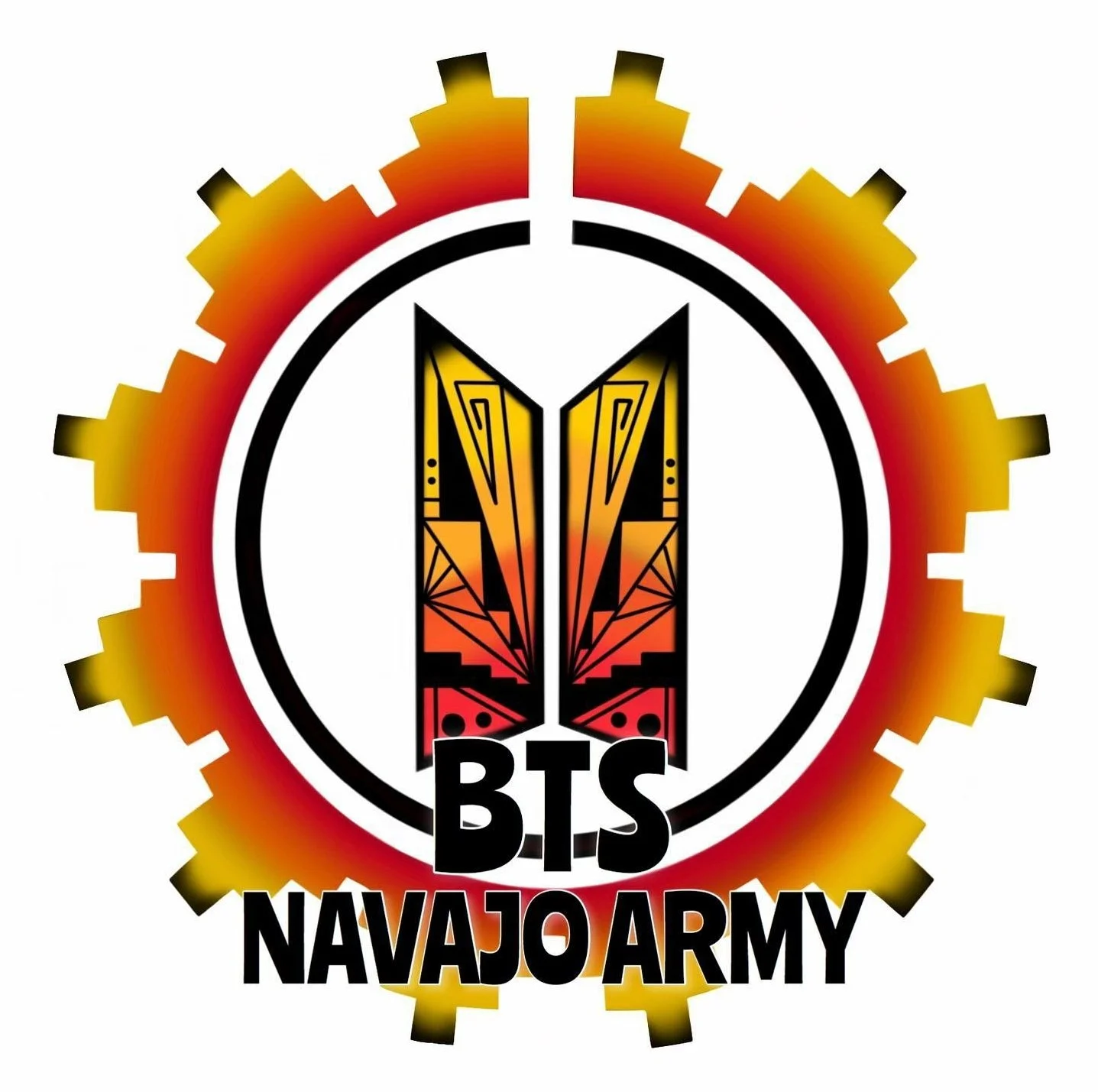
Image Courtesy, Dez
A Seven-Member Korean Pop boy band steals the hearts of many on the Navajo Nation
By, Kianna Joe
Among the millions of fans following the infamous Korean pop band, BTS, Danielle, AKA Dez, Navajo, from Southern Utah on the Navajo reservation, runs one of the most popular fan pages among the Indigenous community, specifically the Navajo community.
BTS or Bangtan Sonyeondan (Bulletproof Boy Scouts) is a South Korean pop band that started their rise to fame in 2013 with their first release, “No More Dream”. Instantly, hundreds of youths took a liking to the seven boys; Jin, Rm, Suga, J-Hope, Jimin, V, and Jungkook.
It was a rough and often discouraging career journey, the seven members pushed themselves to work hard. Due to their endless perseverance, BTS expanded globally, reaching all corners of the world, including the canyons and mesas of the Navajo Nation.
In 2019, “btsnavajoarmy” on Instagram spotlighted the rise of not only the fandom but also showed the impact these seven boys would continuously have on those on the reservation.
Dez shared she had looked for a Native American BTS fan page and reached out to a few possible pages that had never gotten back to her. From there, she took it upon herself to create a page dedicated to the BTS fandom, “A.R.M.Y.” (Adorable Representative M.C for the youth), while also incorporating her Navajo humor and culture.
“I always felt like growing up on the rez, and even in school and university, and in the “real world” you know, work, we are always represented as less than 1% and so it was always kinda unique to say “hey I’m Indigenous” or like “I’m American Indian or Native American”, or “I’m a tribal member” and to kinda know that like in the world, we're still kind of seen as what is that? what does that mean? And then to also identify as an ARMY, we can have all these common interests”
To Dez, BTS is a worldwide known, grammy nominated K-pop band since 2013 that exploded here in the US within the last seven years. She shared that it is a huge inspiration to know that there are artists who experience trials and continue to have their voice and power to promote meaningful messages.
While the inspiration and creation started with Dez, she shares the page has welcomed wonderful “admins” who help with maintaining the social media. The admins were brought in through similar interests in BTS but also through local events Dez had attended. Like the “Bring The Soul” movie premier and Window Rock fair. In both settings she had prepared free BTS-inspired items like candy, cards, and banners, to hand out. Dez was inspired to do so by Korean “A.R.M.Y.” fans who held a unique fandom community.
When asked what “A.R.M.Y.” meant to her, Dez said, “We are just a community, like a family that really loves and cherishes the way that the boys put themselves out there for mental health and speak on each other’s issues and things happening in the world”. Identifying as an A.R.M.Y., to Dez, means being a part of a caring community and being in an even closer community with fellow Native fans.
“They’re always going to be in my life, in some way, even when I’m 60”
Much of her focus was on the positive aspects of the videos and lyrics, including her favorite song from the “Love Yourself: Tear” album, “Anpanman”. Anpanman is a bread character who is shared as a superhero that gave pieces of himself to those who needed it. Dez felt similarly as she does social work in the community, she says, “I know I’m not the strongest superhero, but I know I can help with at least resources and talking about it or gathering people that have the same interest as me”.
BTS had become a group made of encouraging words. Dez shared that during BTS’ speeches, they often would say “Love Yourself”. She talked about the importance of loving oneself for the purpose of one’s own mental health which she had noticed as a “hushed” topic within the Navajo and Native communities.
According to “Mental Health America”, “Native/Indigenous people in America report experiencing serious psychological distress 2.5 times more than the general population over a month’s time”.
There are many factors that go into the high rates of mental health issues within the Native population. One is the lack of connection to the community when moved off/away from the reservation. Or being on a reservation where it’s harder to access the internet compared to the urban city areas which then leads to a lack of connection to the world.
Mental Health America also says, “Most Native/Indigenous people in American live in Mid-West or Western states. About two-thirds now live in urban, suburban, or rural non-reservation areas; about one-third live on reservations.”
“Living on the reservation, you are miles and miles away from others, and you’re secluded, and that ultimately leaves you to be lonely”, says Dez.
With those statistics in mind and what Dez had experienced living on the reservation, it was of importance to Dez and many other Navajo and Indigenous people to connect through culture and music. The band wasn’t just a good band to Dez and others, they were a light in dark times and advocates for mental health issues.
“In some languages, there’s not even a word for suicide”, or “How do we explain that to our elders or to those who don't understand what mental health is”.
Dez created a space for learning to love oneself through a fan page and continues to create alongside her team who have also had their hearts captured by BTS.
To learn more about “BTS Navajo Army”, follow them at @btsnavajoarmy on Instagram and check out their link tree, BTS Navajo Army Linktree