
Xochitlahtohle Art Collective
She Towers has spoken before on the ingenuity and creativity exhibited by the Indigenous youth of this generation, and each day, new examples rise to demonstrate the talent and perseverance of these burgeoning leaders. The Xochitlahtohle Art Collective is doing just that, uplifting and supporting one another as artists, and have even recently come together to publish their own zine. Founded two years ago by Lila I. Rodriguez-Aceves (Nawa), the collective is based out of Los Angeles and made up of ten members, each contributing their own artistic skills to the group. She Towers spoke with Lila and two other members, Mali (Nawa) and Joaquin Rovira (Zapoteco) to learn more about the collective and their work.
In Lila’s own words, Xochitlahtohle is: “We’re a collective of Indigenous youth artists. It’s a space for us as youth, especially urban Indigenous youth, children of immigrants, to create art, have access to resources, and use our art to create change.”
Lila originally had the idea for the collective in 9th grade while in quarantine and then presented the idea to her friends when they all came back for in-person learning. Mali saw the collective as a space where she could grow and develop both as a person and an artist around other Indigenous people, an opportunity she didn’t have as much access to beforehand. They wanted this space to be somewhere they can learn from one another, but also just have fun with their friends as they engage with their culture. As of now, the collective is made up of ten members, many of which have grown up together as friends for years now.
Learning was always a focus of the collective. When it initially began, many of their activities revolved around workshops that members would hold for the rest of the team, teaching them whatever artistic skill they wanted. Lila taught sewing and embroidering, other members held workshops around beading, painting, and crocheting. A lot of the pieces created during these were later sold as a way to raise funds for the collective’s other projects, such as the zine.
Xochitlahtohle has been putting work into collaborations as well, with some of the members working with organizations on personal projects. Mali added that, “I have an organization on the side, and Xochitlahtohle has been a very helpful space with that. They’ve been very supportive of my project and organization, and it’s always been a space that I could go to and that I have gone to in the past for general support with outreach and inspiration.”
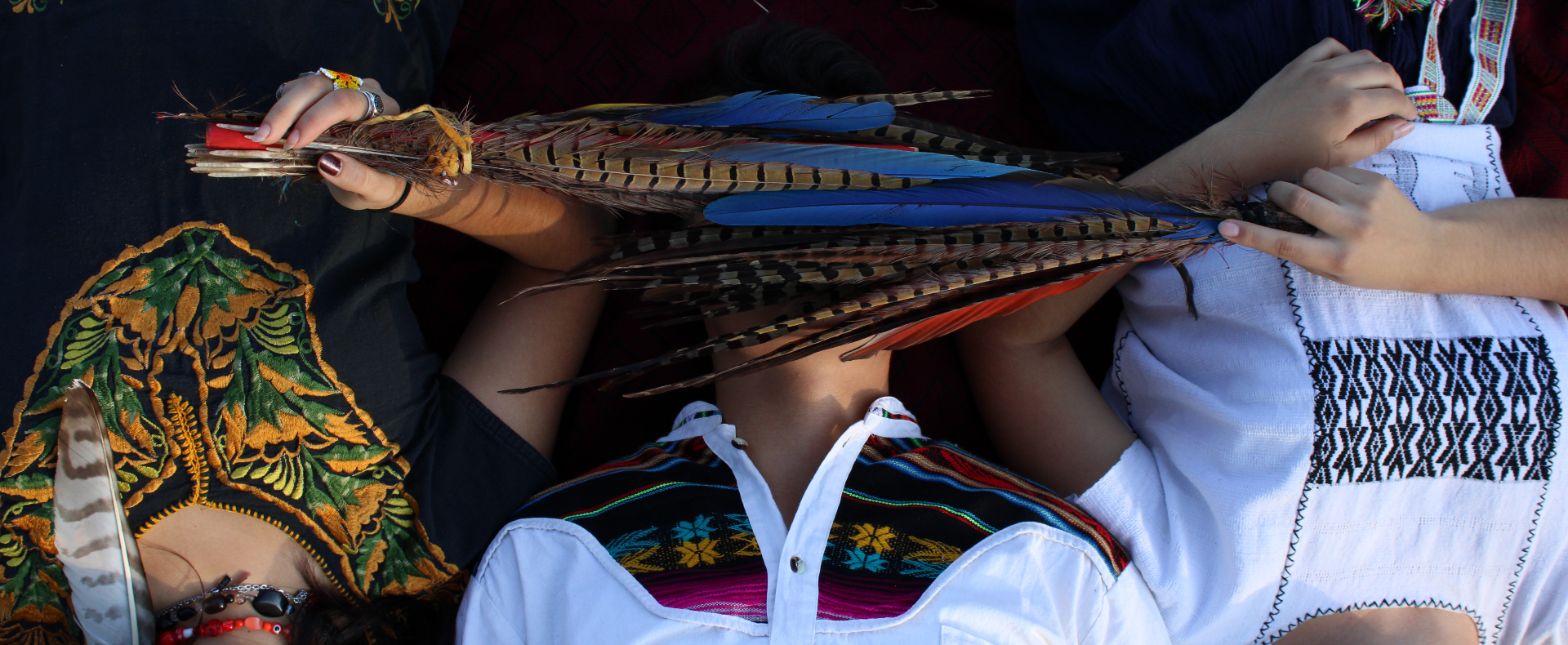
One of the Collective’s Projects for the zine - Courtesy of Xochitlahtohle Art Collective
Some of the collective’s members came to the zine project with prior experience in creating zines for recreation or for school. However, the production and publishing process was something they all had to learn about together. The team spent six months creating their first zine, releasing the official version of it earlier this March. The content featured is comprised of a variety of work, including a number of articles and interviews conducted by the collective members. Joaquin’s contribution was an article written about Eugui Roy Martinez. “He was a biologist, he was Zapoteco, and he identified two species of reptiles, one was even considered extinct before he observed it again. He was murdered, and so I just wanted to talk about his story because it was really special to me since he was Zapoteco, and I’m Zapoteco. He actually named one of the reptiles species in Zapoteco too. I think environmental justice is important too, and an Indigenous person representing that sort of movement and talking about the importance of it, the article is really special to me because of that.”
As an Indigenous youth artist, getting one’s work seen and growing an audience can be especially challenging, and all of the collective’s members have had to put in the effort to make this a reality. Mali spoke about having to step into unknown spaces that are out of her community, as well as figuring out how to represent herself when she’s in those spaces.
“Recently we went to LA Zine Fest which was an insanely new environment, and although it was really cool, personally I thought it was a little intimidating, like it was being in this whole other world. Even with the use of social media, knowing how to use that as an organization, and knowing how to represent ourselves as Indigenous youth, because not only are we representing ourselves as a collective, but also our Indigenous communities.”
Having finished their first zine, the collective is already seeing how their work is engaging with their community and making personal changes in their own lives. After translating the zine into several Indigenous languages, Zapoteco, Akateko, Otomi and many others that are in the works, some of the collective members asked Lila if they could bring them to their family to see if they could read it, a particular moment that had touched the collective’s founder.
Joaquin is eager to see the collective expand its work and, using what they learn from one another, give back to their community through their art. “All of it is about returning what we learn, all our teachings, all our knowledge, I feel it all goes back.”
The Xochitlahtohle Art Collective is an enthusiastic group of artists whose work celebrates their culture and the accomplishments of each member in their daily lives. The innovative artistry that this group of Indigenous youth demonstrates is just the beginning, as they continue to support both one another and the communities they hold dear.
Lila finished with “In the future, giving back our knowledge, everything we learned, to our communities is our plan. I really hope to see the zine make it back to where our families are from. It’s a really big goal we have, and it’s what we’re working towards. Not only to show gratitude, but to continue teaching and providing resources.”
To learn more about the collective, you can follow them on Instagram @xochitlahtohle. Their zine can be read in English, Zapoteco, and Akateko.